
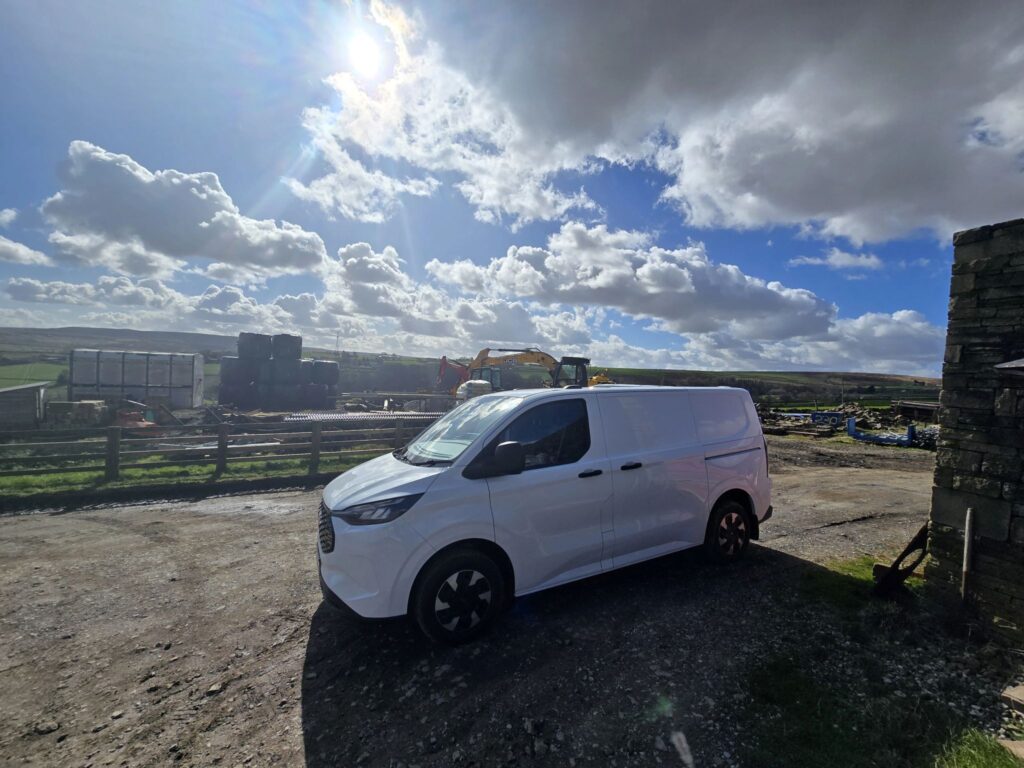
After a week with the Ford E-Transit Custom from Ford, I thought I would share my thoughts and real-world experience.
Firstly, I will be the first to admit that electric vans have traditionally lagged behind their car counterparts when it comes to both range and capability. For years they’ve been seen mainly as city delivery vehicles rather than something you would confidently send out on a proper working day covering serious miles.
But is that still the case?
The E-Transit Custom is very much designed to challenge that perception.
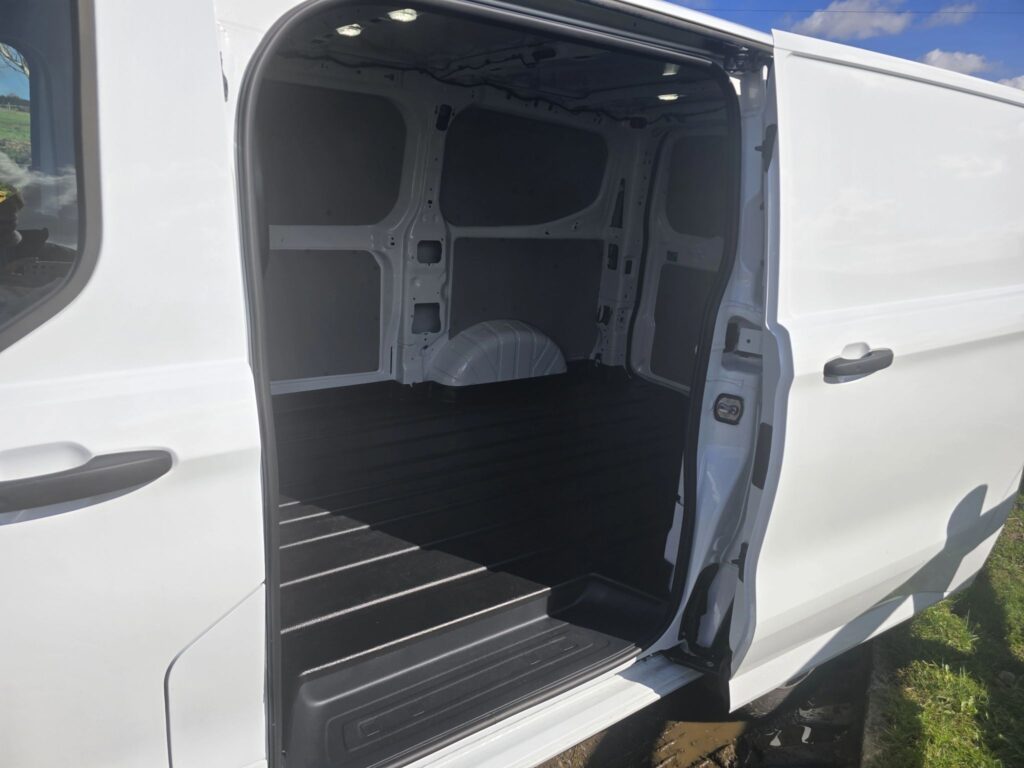
On paper it certainly looks promising. It offers a claimed range of 204 miles, a payload of up to 1,135kg, and the ability to charge from 10–80% in around 39 minutes on a rapid charger. Those are numbers that start to make electric ownership look realistic for many trades and businesses.
Of course numbers on paper and reality can sometimes be two very different things.
So how did it perform in the real world?
Real World Efficiency
During my week with the van I made sure to drive it in a variety of situations to see how it would perform in day-to-day use.
Most of my motorway testing was done without a payload, which is worth mentioning, but even so the results were impressive.
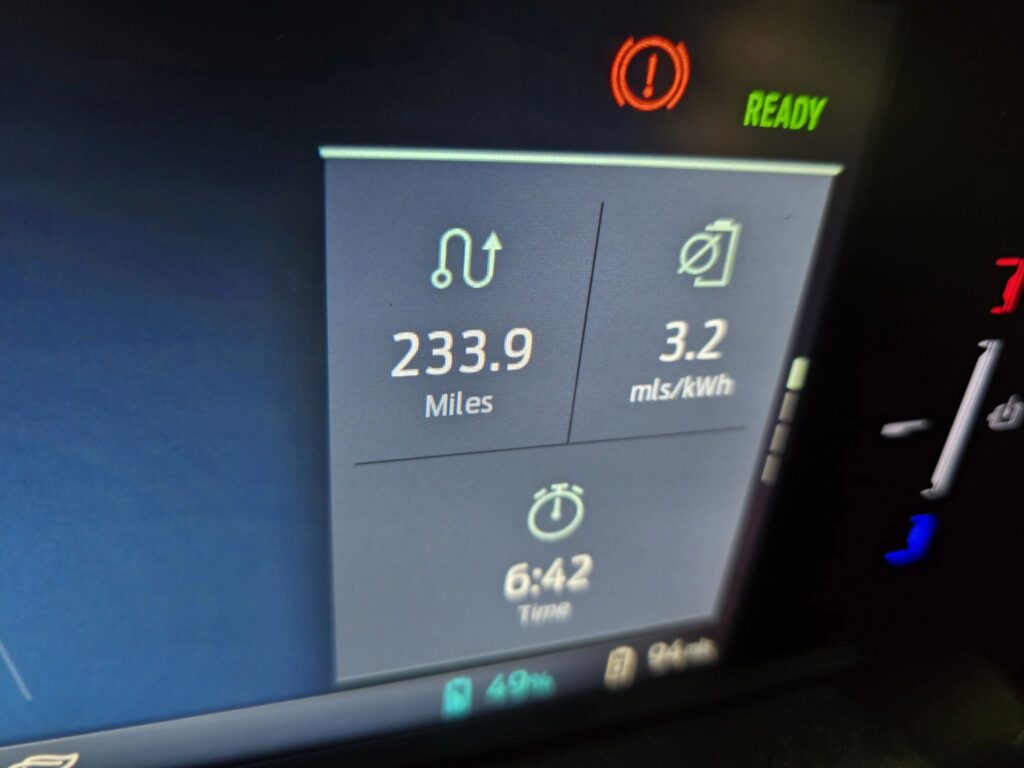
At steady motorway speeds it consistently delivered between 3.2 and 3.4 miles per kWh.
That would translate into a real-world range somewhere between 227 and 241 miles per charge, which is comfortably above the official figure.
What makes that even more impressive is that all of this testing was done in single digit temperatures, when EV efficiency normally drops. Taking that into account I’m pretty confident the 204 mile range quoted for the Ford E-Transit Custom should be very achievable, and likely even easier to match in warmer summer conditions.
Around town things became even more impressive.
Running it along my usual eco route through urban and suburban roads it managed a remarkable 4.7 miles per kWh. If you extrapolate that across the battery capacity 71kWh, that would theoretically result in a range of around 333 miles.
Now of course that would require very ideal conditions and careful driving, but it does demonstrate just how efficient the van can be in the stop-start environment where many commercial vehicles spend most of their working lives.
Living With It – The Road Trip Test
To really see what it would be like to live with, and whether it was as comfortable on the motorway as it was around town, I decided to take it on what I would describe as a fairly epic road trip.
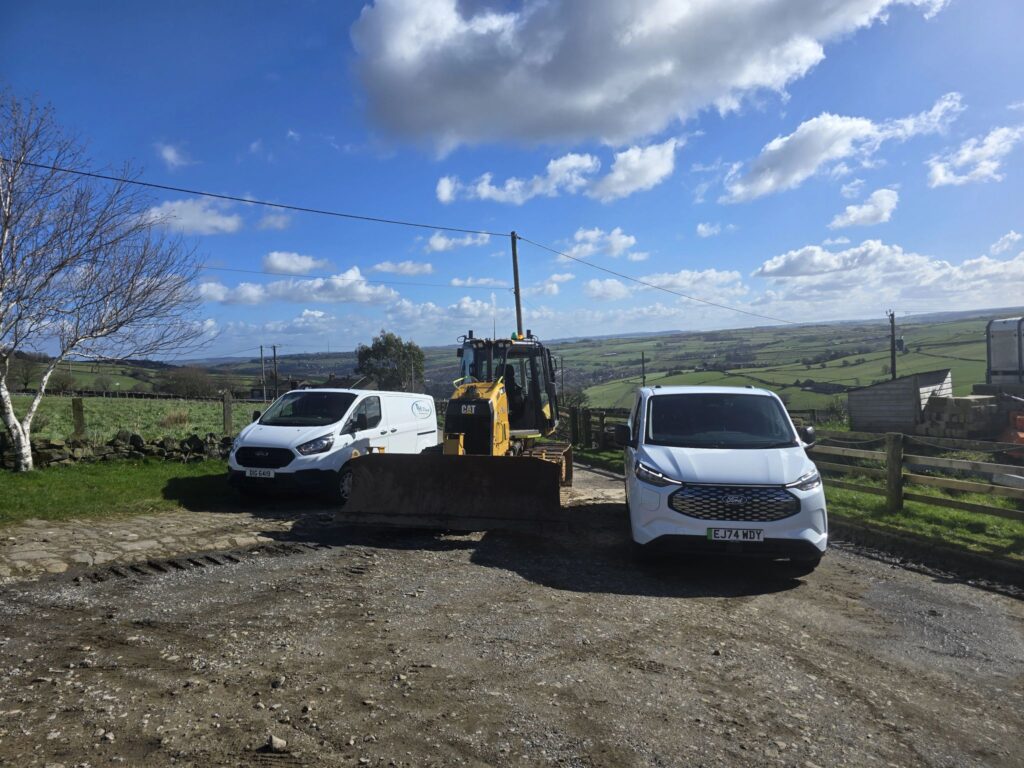
The journey would take me from Swansea to Huddersfield — roughly 230 miles each way.
You may be wondering why I picked Huddersfield as my destination.
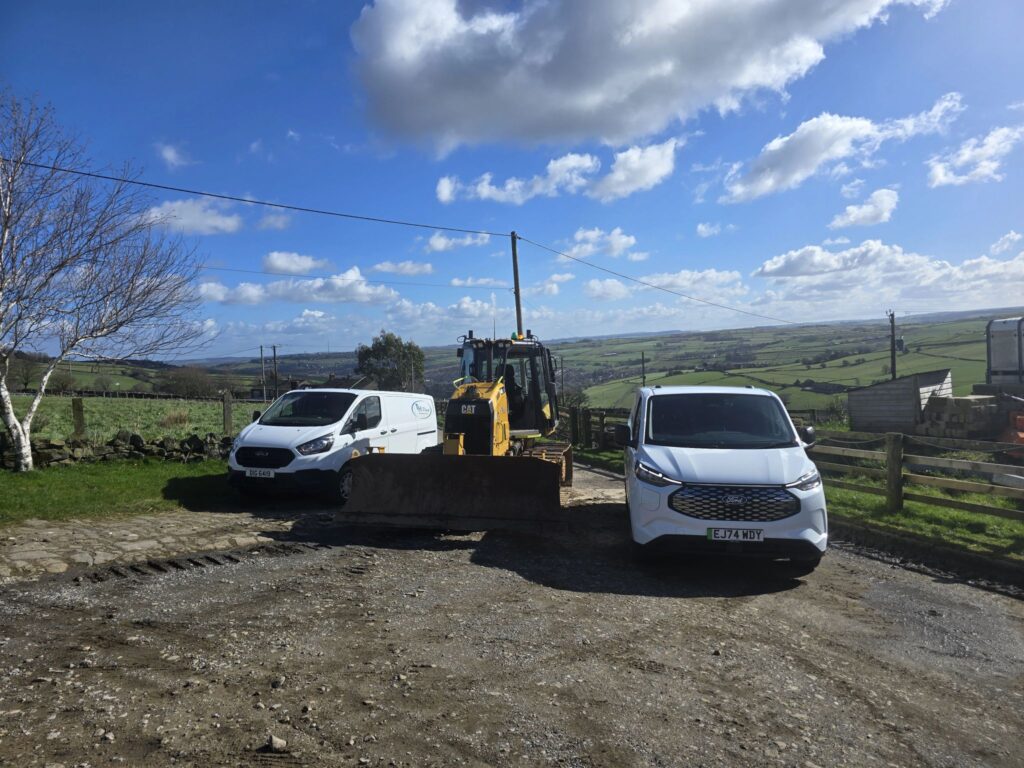
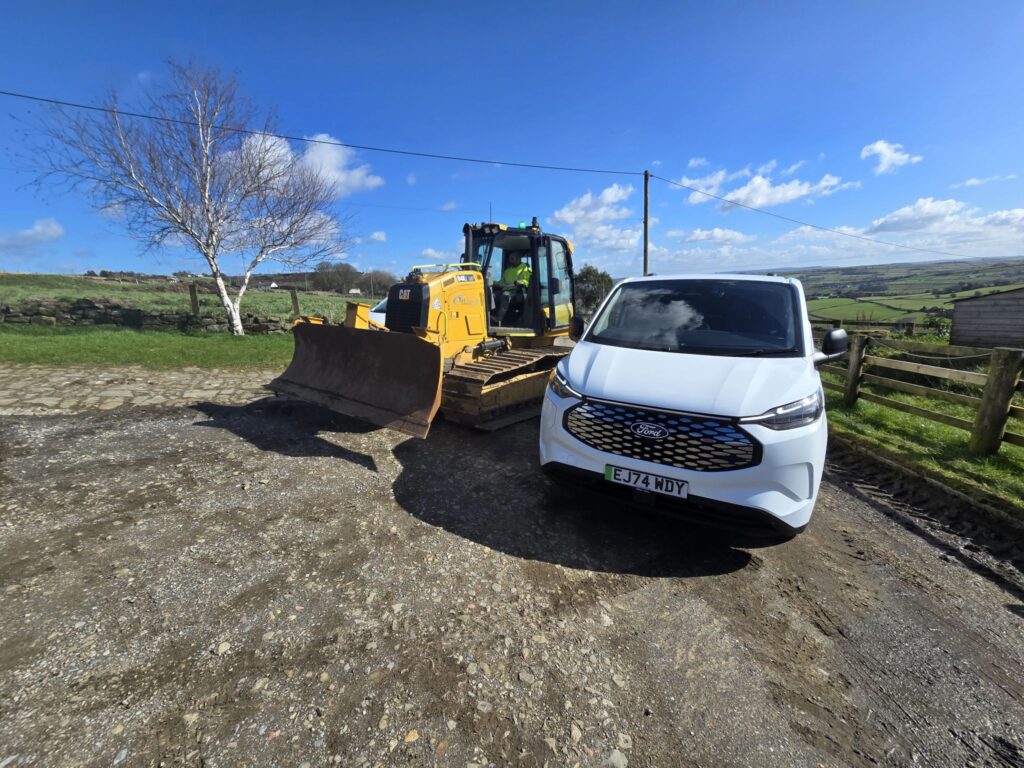
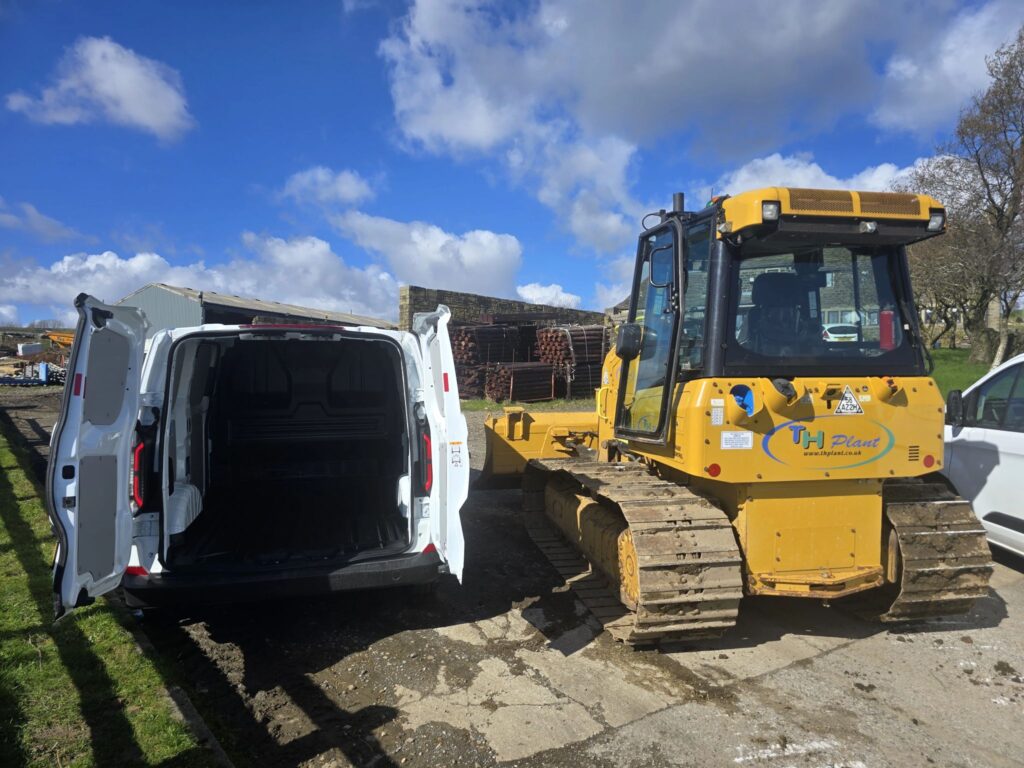
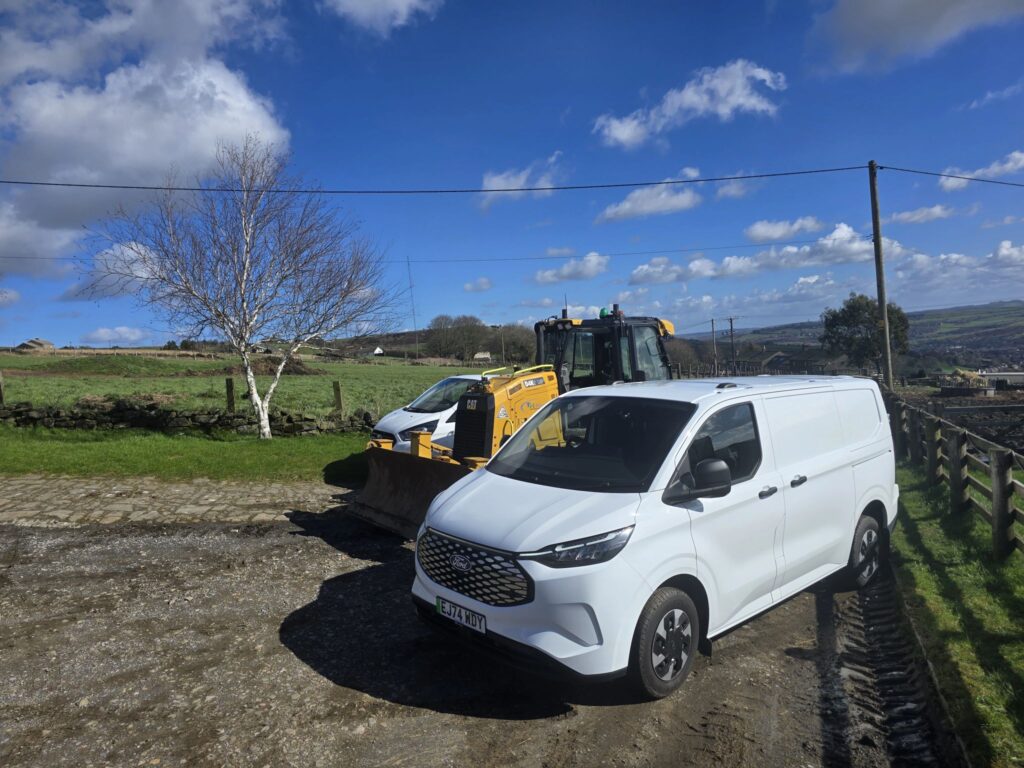
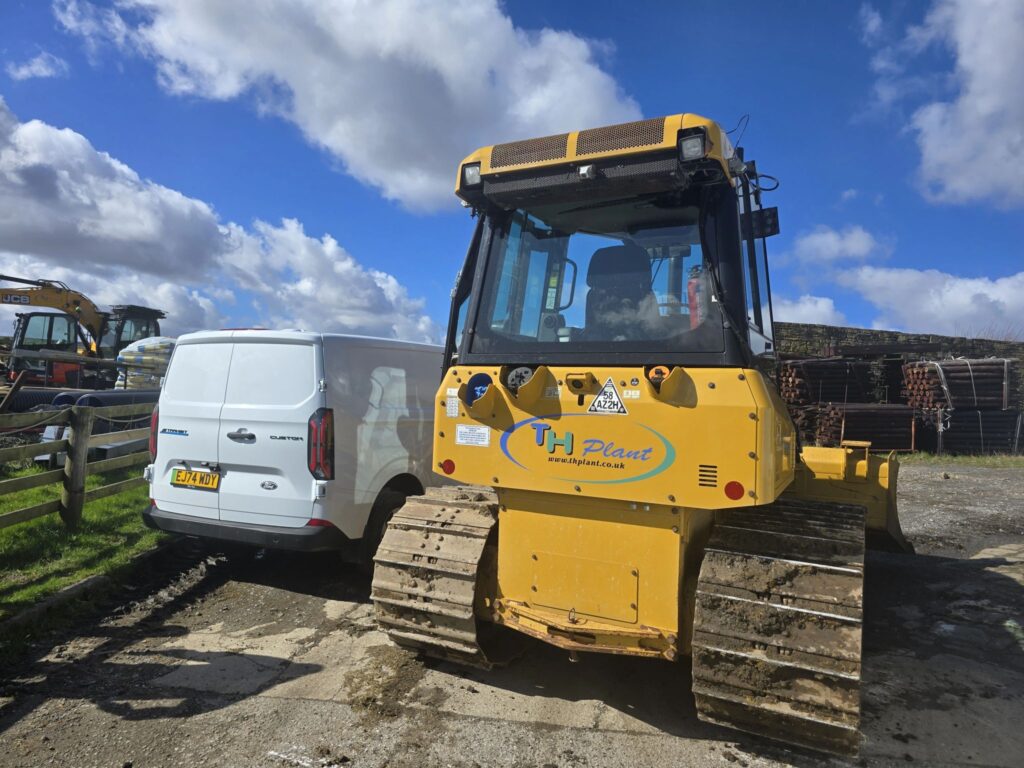
The reason was a visit to my cousin, whose husband Thomas Hirst owns and runs TH Construction UK Ltd.
As a long-time supporter of Ford Motor Company vehicles he was keen to see how the electric Transit compared with the rest of his fleet, which includes a number of traditional Transits along with a Ford Ranger.
So it seemed like the perfect opportunity to test whether an electric van could realistically fit into a working fleet like his.
Setting Off
I will admit I set off on this journey with a little bit of trepidation.
A 230-mile trip is right on the edge of the official range, particularly with a lot of motorway driving involved.
However my concerns were quickly eased.
As soon as the destination was entered into the onboard sat nav, the van automatically plotted a charging stop along the route. This is one of those small details that makes a huge difference in everyday use because it removes much of the guesswork and planning that used to come with long EV journeys.
In reality the trip was far easier than I expected.
Across the entire journey the total charging time came to less than 1 hour and 10 minutes, which is actually far less disruptive than many people imagine when they think about electric vehicles.
Motorway Comfort
Another pleasant surprise was just how comfortable the van is over long distances.
The addition of adaptive cruise control makes motorway driving almost effortless, allowing you to settle into a steady rhythm without constantly adjusting speed.
Like most EVs, the power delivery is smooth and immediate, making overtaking and joining faster traffic very easy. The quietness of the electric drivetrain also makes a noticeable difference on longer journeys.
After several hours behind the wheel it genuinely felt more like driving a modern car than a traditional commercial vehicle.
The Business Case
For businesses looking at making the switch to electric, there are a few things that really matter:
• Range
• Payload capacity
• Charging practicality
• Running costs
The E-Transit Custom performs strongly in all of these areas.
The range is now more than usable for many types of work, particularly for businesses operating regionally.
The 1,135kg payload means that moving to electric doesn’t require sacrificing the carrying capacity that tradespeople rely on.
Charging times are reasonable enough that longer journeys are entirely manageable.
And of course there are the potential savings when it comes to running costs and maintenance, along with the welcome absence of concerns like the well-known wet belt issues found in some modern combustion engines.
Conclusion
After spending a week with the van and putting it through both everyday driving and a long-distance road trip, one thing became very clear.
Electric vans are finally catching up.
The Ford E-Transit Custom feels like a vehicle that has genuinely been designed with working businesses in mind. It offers impressive efficiency, strong real-world range, and the kind of practicality you would expect from a modern Transit.
Most importantly it shows that electric vans are no longer limited to short urban routes — they are becoming proper long-distance workhorses.
For businesses considering the switch, this could well be the ideal van to add to the fleet.
And perhaps best of all, it does all of this without a wet belt worry in sight.